
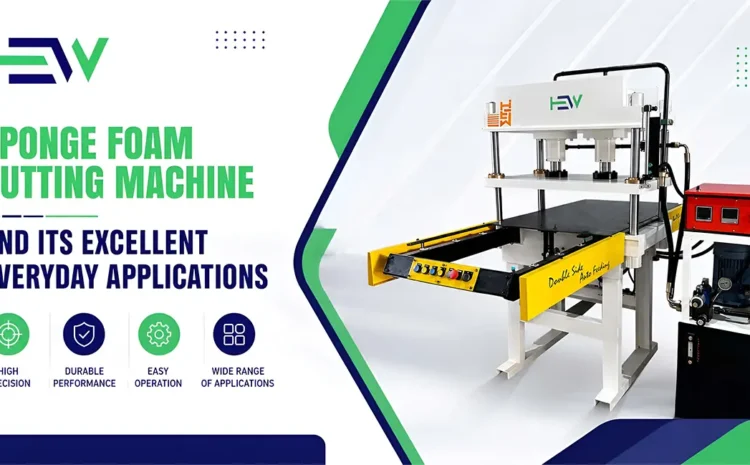
Sponge foam is a common material used across many industries including furniture, packaging, medical supplies and more. It is soft, lightweight, and seems like you could cut it with almost anything. However, cutting it accurately is a bigger challenge than it looks. To get neat, consistent shapes from foam, you need a high-quality Sponge Foam Cutting Machine.
This blog explains what these machines do, how they work, their main uses, what to check when buying one and faqs buyers commonly ask.
A Brief Overview of Sponge Foam Cutting Machine
This foam cutting machine cuts polyurethane foam, sponge foam, memory foam, and similar soft materials into the shapes and sizes a production line needs. That sounds straightforward, but the engineering behind it is more involved than most people realise.
Foam compresses when pressure is applied. A blade moving too slowly tears rather than cuts. Too much heat from friction causes the surface to melt slightly. Getting a clean, flat, dimensionally accurate cut requires the right blade speed, the right tension, and the right feed rate — all calibrated to the specific type and density of foam being processed.
The sponge foam cutting machine comes in both models manual as well as automatic so you can choose according to your production needs.
Types of Cutting Systems
Hot wire cutters: A heated wire melts through foam instead of slicing it. Good for smooth edges and contour shapes.
Guillotine and knife cutters: Straight blade systems built for speed. Best for cutting sheets and blocks in high-volume runs.
CNC foam routers: Computer-controlled cutting that follows a programmed path. Right choice for complex shapes and repeatable patterns.
Die cutting and foam punching: A shaped die stamps out pieces in one motion. Fast and consistent for high-volume identical shapes. Also called a Foam Punching Machine in some industries.
How the Foam Cutting Machine Works?
The process is fairly consistent across machine types, even though the mechanisms vary:
- Foam is loaded onto the cutting platform — either as a large block, a roll, or a sheet.
- The operator programmes or sets the required dimensions.
- The cutting element — blade, wire, or band — moves through the foam at a controlled speed.
- The cut piece exits cleanly and moves to the next stage of production.
Applications of Sponge Foam Cutting Machines
Foam turns up in more products than most people ever think about — and behind almost all of them is a cutting machine doing precise work.
Furniture and Mattress Production
Sofa cushions, mattress layers, seat pads, and back support pieces all start as large foam blocks that get cut down to specific dimensions. Furniture manufacturers run these machines continuously to cut foam accurately.
What matters in this sector:
- Consistent thickness across every mattress layer
- Profile cuts for shaped seat cushions
- Matching dimensions across large batch runs
Packaging and Protective Inserts
Those foam inserts that hold electronics, medical equipment, or fragile goods securely inside a box — every single one was cut on a machine like this. Too loose and the product shifts during shipping. Too tight and it cannot be fitted properly. The dimensions have to be right.
Automotive Components
Car seats, door panels, headrests, dashboard padding, and acoustic insulation panels all contain foam cut to tight tolerances. In automotive supply chains, dimensional accuracy is non-negotiable.
Sports and Fitness
Gym mats, yoga blocks, helmet liners, protective sports padding — these all require foam cut cleanly and accurately to maintain the structural performance of the finished product.
Healthcare Products
Hospital mattresses, wheelchair cushions, pressure-relief pads, and prosthetic padding are cut to medical specifications where dimensional accuracy directly affects patient outcomes. There is no room for variation here.
Construction and Insulation
Acoustic foam panels, thermal insulation boards, and vibration-dampening pads used in buildings and industrial equipment all require foam cut to panel dimensions that fit standard specifications.
What to Check Before Buying the Foam Cutting Machine?
Here are some things to consider when buying a sponge foam cutting machine:
Foam compatibility: Check that the machine handles the specific foam densities and thicknesses your operation uses. A machine rated for light foam may struggle with high-density polyurethane.
Dimensional accuracy: Ask about the tolerance. How much variation exists between cuts? For most production applications, ±1mm to ±2mm is acceptable — tighter is better for precision applications.
Throughput speed: The machine needs to keep pace with your production line. A machine that cuts accurately but slowly becomes a bottleneck that costs more in lost time than it saves in precision.
Manual vs CNC control: Manual machines suit high-volume repetitive cutting of consistent dimensions. CNC machines suit operations running multiple product types or complex cutting profiles.
Blade and consumable costs: Blades and cutting wires wear out. Understand the replacement frequency and cost before committing to a machine — and confirm that spares are readily available locally.
After-sales support In a production environment, downtime is expensive. A sponge foam cutting machine that comes with reliable technical support and accessible spare parts is worth paying more for upfront.
Common Mistakes to Avoid
- Choosing the wrong cutting method for the foam type you work with
- Skipping operator training — even small errors in setup increase scrap rates noticeably
- Ignoring dust and fume extraction, which some foam types require
- Buying on purchase price alone without accounting for running costs, downtime, and service availability
Basic Maintenance for Long Machine Life
- Check and replace blades or wire elements regularly — worn cutting elements show up immediately in cut quality
- Keep guides, belts, and rails clean and properly lubricated
- Inspect electrical connections and safety switches on a set schedule
- Follow the manufacturer’s calibration and software update guidance
Environmental Considerations
Efficient cutting directly reduces foam waste, which lowers both material costs and disposal volumes. Some foam types can be recycled — it is worth checking with your foam supplier about recycling programmes. Energy-efficient machine models are also worth considering for operations where machines run long hours daily.
Conclusion
HEW Foam Cut Machine manufactures and supplies professional-grade sponge foam cutting machines for industrial production use. From standard sheet cutting to CNC-controlled profile cutting, our equipment is built for the accuracy, speed, and long-term reliability that commercial foam manufacturing requires. For bulk purchase enquiries and production-scale requirements, we provide full technical guidance and after-sales support.
Frequently Asked Questions
What types of foam can this machine cut?
Polyurethane, memory foam, latex, rebonded, and open-cell sponge foam all work fine. Just make sure the machine’s rated density and thickness range covers what you actually process — not just what is listed on the spec sheet.
What’s the difference between a Horizontal vs Vertical Sponge Foam Cutting Machine?
Horizontal machines take a foam block and cut it into sheets of even thickness. Vertical machines handle width, length, and profile cuts. Most workshops end up needing both at some point.
How often do blades need to be replaced?
It varies depending on foam density and daily cutting volume. Somewhere between a few weeks and a few months is typical. Before you buy, check whether spare blades for that model are easy to get hold of.
Foam Cutting Machine vs Foam Punching Machine — What is the Difference?
One cuts foam into sheets, blocks, or profiles. The other punches holes and shaped cutouts into the foam using dies. They do different jobs, and many production lines use both machines together.
What should bulk buyers actually focus on?
Foam compatibility should come first, followed by accuracy, speed, and the control system. After that, consider blade replacement costs and local service support. A sponge foam cutting machine with poor service coverage can cost far more in downtime than you save on the purchase price.